
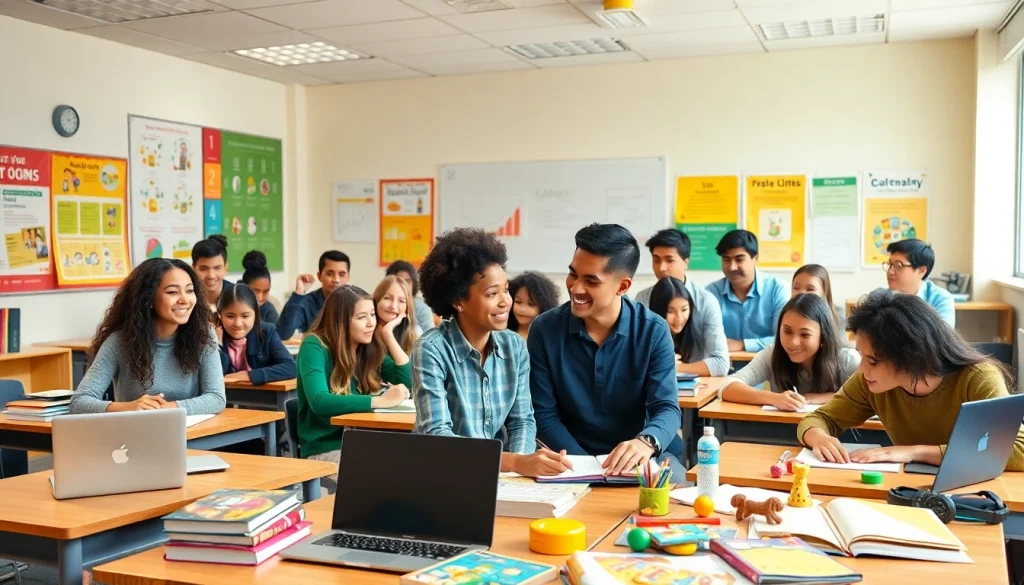
Understanding the Importance of Education in Modern Society
Education plays a pivotal role in shaping the future of individuals and societies alike. It influences personal growth, economic progress, and social equity, making it one of the most crucial aspects of modern life. As we delve into the multifaceted benefits of education, it’s important to recognize how it acts as a foundation for personal and societal development. For individuals seeking to broaden their horizons and improve their lives, investing in Education is a wise choice that yields long-term benefits.
The Role of Education in Personal Development
Education is fundamentally about more than just acquiring factual knowledge; it is about fostering critical thinking, creativity, and personal identity. At its best, education nurtures individual potential and encourages lifelong learning. It equips students with essential skills tailored for personal success and societal contribution.
One of the fundamental roles of education is to cultivate cognitive skills such as analytical and quantitative reasoning. These skills empower individuals to tackle complex problems, make informed decisions, and adapt to changing circumstances. Furthermore, education encourages emotional and social development through the cultivation of interpersonal skills, empathy, and ethical reasoning—qualities that are essential for harmonious coexistence in a diverse society.
In addition to intellectual growth, education encourages self-discipline, resilience, and the ability to set and achieve goals. As students navigate their educational journeys, they encounter challenges that require perseverance and strategic planning, leading to enhanced confidence in their abilities. This journey of self-discovery is crucial for personal empowerment and establishing a firm foundation for future endeavors.
How Education Influences Economic Growth
Education is a significant driver of economic growth and development. A well-educated workforce is crucial for fostering innovation, improving productivity, and fostering competitiveness in the global economy. Countries with higher levels of education tend to experience lower unemployment rates and higher levels of income, leading to overall economic prosperity.
Investment in education tends to yield substantial economic returns. Studies show that each additional year of schooling can increase an individual’s earning potential significantly. As the workforce becomes more skilled, businesses benefit from increased productivity and efficiency. The correlation between education levels and gross domestic product (GDP) is evident; countries prioritizing education often see robust economic growth trajectories.
Moreover, education encourages entrepreneurial spirit. A well-rounded educational background equips individuals with the skills, confidence, and knowledge to initiate business ventures and drive innovation. This entrepreneurial culture not only contributes to economic vitality but also fosters job creation, providing opportunities for others in the community.
Education as a Tool for Social Equality
Education is a fundamental tool for achieving social equality. By providing access to quality education, societies can reduce disparities rooted in socioeconomic status, race, and gender. Education empowers marginalized groups, equipping them with the knowledge and skills needed to overcome barriers and improve their circumstances.
Moreover, education plays a vital role in promoting civic engagement and social responsibility. Educated individuals are more likely to participate in democratic processes, advocate for social justice, and contribute positively to their communities. This engagement fosters a more inclusive society where diverse voices are heard and valued.
It is essential to acknowledge that access to quality education is often unevenly distributed. Efforts must continue to ensure equitable educational opportunities for all, particularly in underprivileged areas. Policies that focus on inclusivity, affordability, and access to resources can bridge the gap and promote social equity through education.
Types of Education System Frameworks
Formal vs. Informal Education
Education systems can be broadly categorized into formal and informal education. Formal education refers to structured educational programs that take place in schools, colleges, and universities, incorporating a systematic curriculum and qualifications. On the other hand, informal education encompasses non-structured learning that occurs outside traditional educational institutions, such as community programs, online courses, and self-directed learning.
Both types of education play important roles in an individual’s learning journey. While formal education often provides foundational knowledge and recognized credentials, informal education promotes practical skills and lifelong learning geared toward personal interests and professional development. A complementary approach, integrating both formal and informal education, can equip individuals with a diverse skill set that adapts to the dynamic job market.
Traditional Education vs. E-Learning
The evolution of technology has significantly transformed education delivery methods, with traditional classroom settings contrasting sharply against e-learning platforms. Traditional education relies predominantly on face-to-face teaching, involving direct interaction between educators and students within physical classroom environments. This environment fosters immediate feedback, personal connections, and shared experiences among students.
In contrast, e-learning, facilitated by technology, provides flexibility, accessibility, and personalization. Students can access resources and engage in lessons at their convenience, allowing for self-paced learning tailored to individual needs. However, e-learning also presents challenges, such as reduced face-to-face interaction and the potential for distractions in a home environment.
Both traditional and e-learning models have their advantages and disadvantages, and hybrid models combining elements of both approaches often yield the best educational outcomes. By leveraging technology while maintaining meaningful educator-student engagement, effective learning experiences can be created to meet diverse learning preferences.
The Importance of Lifelong Learning
In an ever-evolving world, the concept of lifelong learning has gained significant traction. Lifelong learning embodies the ongoing, voluntary, and self-motivated pursuit of knowledge for personal or professional development. This approach to education is particularly relevant in today’s fast-paced and ever-changing job market, where new skills and competencies are constantly in demand.
Embracing lifelong learning requires a mindset shift. Individuals must be proactive in seeking opportunities to learn, be it through formal education, professional development programs, or informal avenues such as workshops and online courses. Furthermore, organizations can foster a culture of lifelong learning by encouraging employees to pursue continuous education, thus enhancing workforce adaptability and innovation.
The benefits of lifelong learning extend beyond career advancement. Engaging in ongoing education contributes to personal fulfillment, cognitive health, and social inclusion. By valuing and investing in lifelong learning, individuals can navigate the complexities of life and work with confidence and resilience.
Challenges in the Education Sector
Access to Quality Education
Despite the acknowledged importance of education, access remains a significant challenge worldwide. Disparities in educational quality and access persist, resulting in unequal opportunities for marginalized populations, including low-income families, rural communities, and underrepresented minorities.
Addressing this challenge requires a concerted effort from governments, educators, and communities to create inclusive educational policies and initiatives. Strategies might include increasing funding for under-resourced schools, providing scholarships, and ensuring that educational materials and technology are accessible to all students.
Additionally, collaboration between public, private, and non-profit sectors can facilitate innovative solutions aimed at empowering disadvantaged students. Mentorship programs, tutoring services, and community engagement initiatives can further mitigate barriers to education.
The Impact of Technology on Learning
The integration of technology into education has transformed the learning landscape. While technology offers numerous benefits, such as enhanced engagement and access to vast resources, it also presents challenges that must be addressed to ensure effective learning outcomes.
One significant concern is the digital divide, where unequal access to technology can exacerbate educational inequalities. Not all students have the same access to devices and reliable internet connections, hindering their ability to participate in online learning opportunities. Additionally, excessive reliance on technology may diminish critical traditional learning skills, such as face-to-face communication and problem-solving.
To mitigate these challenges, educators and institutions must strike a balance between leveraging technology and maintaining fundamental teaching practices. Developing digital literacy programs, ensuring data privacy, and prioritizing equitable technology access must be central to educational strategies moving forward.
Adapting Curriculum to Modern Needs
The ever-changing job market demands that educational curriculums remain relevant and responsive to modern needs. Traditional curriculums often face criticism for being outdated and lacking practical applications. To address these concerns, a more dynamic and interdisciplinary approach to curriculum design is needed.
This could involve integrating real-world problem-solving, critical thinking exercises, and hands-on experiences within the curriculum. Collaborations with industry experts, business leaders, and community stakeholders can provide valuable insights into current workforce demands, ensuring that educational programs align with market needs.
Moreover, educational institutions must emphasize the importance of soft skills, such as communication, adaptability, and teamwork, which are essential in any career path. By creating a curriculum that prepares students for the complexities of the modern world, we empower them to be successful in their respective fields.
Innovative Approaches to Enhance Education
Incorporating Technology in the Classroom
As technology continues to evolve, its incorporation into classroom instruction presents opportunities for enriching the learning experience. Innovative tools such as interactive whiteboards, educational apps, and online collaboration platforms can enhance interactivity and engagement in the learning process.
Teachers are encouraged to explore dynamic teaching methods that go beyond traditional lecture-based formats. Project-based learning, gamification, and flipped classrooms are among the various strategies that leverage technology to promote deep learning and critical engagement with course materials. By diversifying instructional approaches, educators can cater to varying learning preferences and support diverse student needs.
Project-Based Learning and Its Benefits
Project-based learning (PBL) is an experiential learning approach that puts students at the center of the learning process. PBL encourages students to engage with real-world problems by collaborating on projects that require critical thinking, creativity, and teamwork. This hands-on approach not only enhances academic skills but also fosters a deeper connection to the subject matter.
Key benefits of project-based learning include increased student motivation, improved retention of information, and the development of essential life skills. By making learning relevant and personal, PBL enables students to take ownership of their education and apply their knowledge in meaningful ways.
Furthermore, PBL fosters collaboration between students, building valuable interpersonal skills and a sense of community within the classroom. As students work together toward shared goals, they develop communication, negotiation, and conflict-resolution skills—essential competencies for success in the workforce.
Building Collaboration between Schools and Communities
Education does not happen in isolation. Schools must cultivate strong partnerships with families, local businesses, and community organizations to create a supportive educational ecosystem. Collaborative efforts can help enhance the educational experience for students, strengthen community ties, and promote sustained educational initiatives.
Partnerships with local businesses can provide students with valuable resources, such as internship opportunities, mentorship programs, and donatable supplies or materials. Similarly, collaboration with community organizations can lead to workshops, extracurricular programs, and parental engagement initiatives that foster a culture of learning beyond the classroom.
Encouraging community involvement creates a sense of shared responsibility for education and enriches the learning experience for all students. Building these connections fosters a network of support that empowers learners to succeed academically and socially.
Measuring the Success of Educational Initiatives
Performance Metrics in Education
To assess the effectiveness of educational initiatives, institutions must establish clear performance metrics. These metrics should encompass a variety of indicators, including student achievement, graduation rates, and attendance levels. Additionally, qualitative measures such as student engagement, satisfaction, and well-being are pivotal for a comprehensive evaluation.
Performance metrics should serve as a roadmap for continuous improvement within educational systems. Identifying areas of strength and weakness allows for strategic interventions that enhance instructional quality and student outcomes. Tools like standardized assessments, formative evaluations, and self-reflection surveys can aid in gathering relevant data for informed decision-making.
Feedback Mechanisms for Continuous Improvement
Implementing feedback mechanisms is vital for fostering a culture of continuous improvement in education. Gathering insights from students, educators, and stakeholders can facilitate data-driven decisions that enhance instructional practices and policies. Regular feedback loops enable institutions to respond effectively to emerging challenges and capitalize on successful strategies.
Surveys, focus groups, and classroom observations are effective methods for collecting feedback that informs curriculum design, teaching methods, and administrative operations. Furthermore, fostering open communications channels encourages stakeholders to voice their concerns and contribute to collective improvement efforts.
Case Studies of Successful Educational Programs
Highlighting successful case studies can provide valuable insights into effective educational practices and innovations. By examining diverse educational initiatives, educators and administrators can glean lessons on implementing similar strategies in their contexts.
For instance, schools that have integrated mental health support programs have seen significant improvements in student well-being and academic performance. These initiatives focus on addressing the diverse emotional and psychological needs of students, thereby creating a more conducive learning environment.
Similarly, programs that prioritize community engagement and parental involvement have demonstrated higher student achievement and retention rates. Building strong partnerships between families and schools enhances accountability and support for student progress, ultimately leading to more successful educational outcomes.
Through ongoing assessment of educational initiatives, institutions can refine their approaches, celebrate successes, and foster a culture of innovation and excellence in education.